global@hmeonline.com
Mon to Fri 09:00 – 17:30






If you still think that the Long Beach area of Los Angeles in the United States is the number one in the world, then you are wrong!
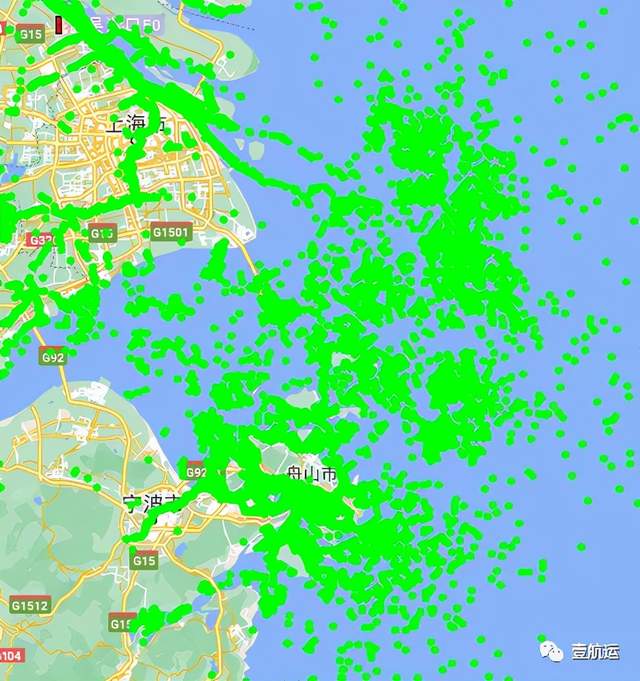
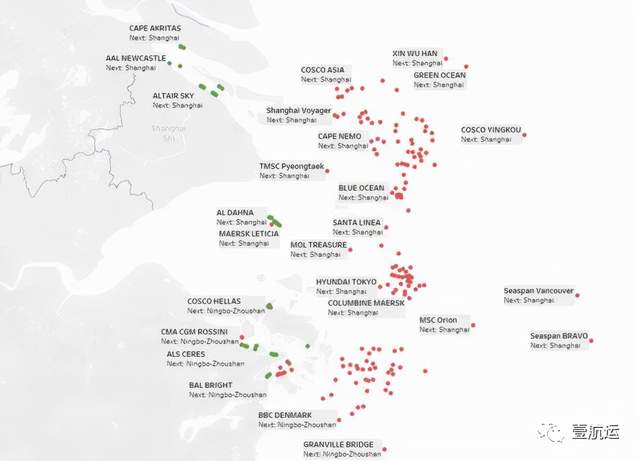
The latest data shows that Ningbo and Shanghai, which have 154 container ships waiting to be berthed, have far surpassed the Los Angeles and Long Beach areas with 73 container ships waiting to be berthed. They have become the new "king of congestion" in the global shipping industry!
▲Shanghai and Ningbo become the new "blocking king"
According to the latest data from Vessel Value, there are a total of 427 container ships lining up at global ports, and the supply chain crisis has worsened by 14% since the beginning of September. The company said that more and more ships are heading to the port, so there is no sign of improvement.
At the same time, the bottleneck in Asia is getting worse. Only last Friday (September 24), the number of ships waiting to berth near Ningbo and Shanghai was twice as many as the US West Port, reaching 154!
Among them, 74 ships waiting to berth outside Ningbo and Zhoushan, which is equivalent to 306,538 teu, an increase of 48% in just one week.
Whether due to the surging export volume, super typhoon "Santo", or the new crown epidemic, the increasing congestion of Chinese ports is another uncertain factor in trans-Pacific trade.
Black swan incidents one after another
Congestion at Chinese ports has slowed down export traffic, which is bad news for US importers, but it may temporarily relieve pressure on the ports of Los Angeles and Long Beach.
In June of this year, the operation of Yantian Port in China was severely restricted due to the new crown pneumonia epidemic, and the number of ships anchored in San Pedro Bay, California, decreased. The problem faced by California ports is that after a temporary reprieve, a large number of delayed cargoes followed.
Simon Sundboell, the founder of eeSea, said in an interview: "You want more stability, not these fluctuations. I think everyone is worried that the fluctuations will become more Violent." "When the system is already so strained, all these unexpected events can become the cause of congestion."
High freight rates attract a large influx of capacity into the U.S. line
One of the main reasons for traffic congestion on both sides of the Pacific is: limited land transportation capacity (terminals, truck transportation, railway transportation, warehousing transportation), but the transportation capacity of a single sea route is very flexible.
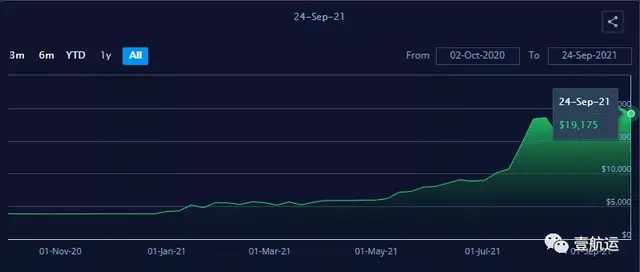
Although there are a limited number of ships in the world, operators can move ships to where they make the most money. Now, trans-Pacific trade is a particularly profitable transaction: the spot price, including premiums, can reach up to $20,000 per 40 foot equivalent unit (FEU).
▲September 24, the latest US West shipping fee
"These assets [ships] are super maneuverable," Sundboell said. "What's happening now is the opposite of what has plagued the industry for the past 20 years. Five years ago, people asked: How can trans-Pacific freight from [every FEU] US$2,000 has dropped to US$1,500? That’s because you can ship one ship from one place to another, and suddenly there are more ships, price wars and freight rates drop.”
"Now we are seeing the opposite," he said. As ship operators increase capacity on trans-Pacific routes, congestion increases, delays increase, shippers’ incentives to pay insurance premiums are supported, and all-inclusive freight rates remain at record highs.
The number of airline services has surged
According to eeSea, services on the East Coast of the United States surged from 48 in January to 67 this month. In comparison, the number of services on this route remained fairly stable last year, at 42-46.
In addition, ships from other industries have also been transferred to serve as "extra loaders" (ships that perform one-off voyages). In some cases, multiple temporary vessels will make multiple round trips-a mix of additional loaders and scheduled services.
Sundboell said: "We will definitely see shipping companies transfer ships from Asia-Middle East and Asia-Africa and put them into trans-Pacific trade."
"Whether it's a round trip as an additional loader or a semi-permanent one, I don't even think that operators know themselves now. They are just'playing the market', if you transport a ship from the Middle East and put it across the Pacific It’s more economically meaningful, and they’ll do that, whether it’s one month, three months or six months-that’s why no one knows what the network will look like in six months."
"The production line managers in Copenhagen, Geneva and Marseille are not only paying attention to the containers, but also paying attention to the benefits and costs of each container."
Trans-Pacific ships are getting smaller and smaller
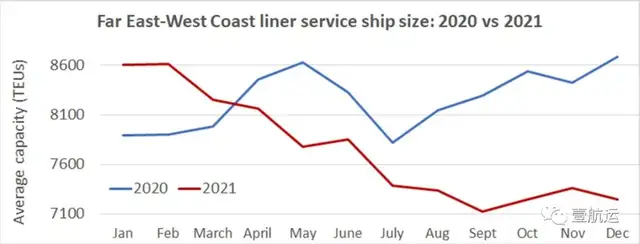
Another reason for the increased traffic congestion across the Pacific is: Not only are there more and more ships, but also smaller and smaller, which leads to the need for more ships to load the same amount of cargo.
According to eeSea, the average capacity of ships on the Asia-West Coast route in January was 8,601 teu, while the current capacity is 7,125 teu, a decrease of 17%.
American Shipper recently analyzed the average capacity of ships currently anchored in or drifting away from Southern California, and compared with the peak berthing period in the first quarter of February 1, and found a similar decline: the average capacity of ships dropped from 8,060 teu to 6,184 teu, a decrease. 24%.
The smaller average ship size "will definitely slow down further," Sundboell said.
Some operators have increased the capacity of trans-Pacific routes by buying ships in the second-hand market or leasing ships in the chartering market. Most of the boats available for purchase or lease in 2021 are smaller-sized boats.
The transfer of capacity from other industries by liner companies has also reduced the average scale because these industries use ships with lower capacity. Sundboell said: "The reason for the smaller ships is that they were dispatched from routes in the Middle East and Africa."
How the supply chain crisis ended
Ship operators can put as many ships as possible on trans-Pacific routes to chase record-breaking spot rates and short trade on other routes, but in the end, this imbalance should correct itself.
Sundboell explained: “This is a way of self-balancing.” He pointed out that if the ships of other industries are removed, the freight rates of these industries will rise to the level that attracts the ships to come back.
In the first quarter, when the anchorages near Los Angeles and Long Beach were filled, the carriers could not transport enough ships back to Asia to load the cargo in time, so they had to "blank" (cancel) a large number of voyages, which eased the second quarter Congestion.
Taking into account the extreme parking conditions in China and Southern California, the blank flight scenario may be repeated in the fourth quarter-this is a worrying prospect for importers.
Lack of predictability in future airline services
Even a company like eeSea that tracks blank voyages cannot say with certainty what will happen in the fourth quarter.
In the first half of 2020, when shipping companies cancel voyages due to the decline in demand caused by the blockade, they will announce the cancellation of voyages a few months in advance, which provides an important signal to the market. This year there are far fewer notices, because most of the blank flights this year are caused by congestion rather than falling forward demand.
Sundboell said: "In November, there were only 8 air flights (on the west coast of Asia), and only 3 in December, but this is only because the shipping company has not notified them. We will enter a blank in the system only after getting confirmation from the shipping company. flight information."
He said: "I think this is what frustrates shippers. Shippers don't want to be forced to get used to the fact that the ship is always 10 days late - or they don't even know when it will come."