global@hmeonline.com
Mon to Fri 09:00 – 17:30






On September 3, Hebi Longyu New Materials Co., Ltd. and China Wuhuan Engineering Co., Ltd. held an EPC contract signing ceremony for the first phase of the annual production of 300,000 tons of polyoxymethylene (POM) project. The project has a total investment of 2.5 billion yuan and is jointly constructed by the People's Government of Hebi City and Henan Energy and Chemical Group.
In addition, the project is adjacent to the 600,000 tons/year methanol plant in Hebi Chemical Park, and the main raw material methanol can be transported through pipelines.
Domestic consumption is concentrated in East China and South China
POM is a thermoplastic engineering plastic with high melting point, high density and high crystallinity without side chains. It is one of the five major engineering plastics. Its specific strength and specific stiffness are similar to those of metals. It is an engineering plastic with the closest mechanical properties to metal materials. It is called "the metal in plastic", and it is also known as "super steel", "Saigang" and "duogang".
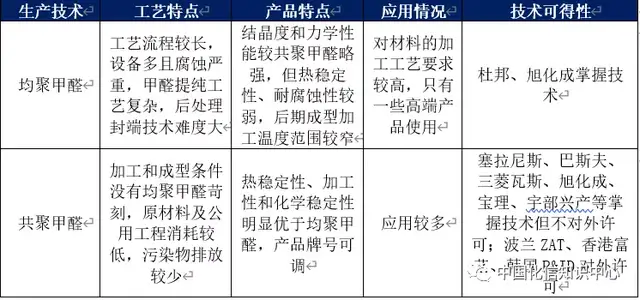
The production of POM is mainly based on methanol as a raw material, firstly oxidized to form formaldehyde, which is obtained through different polymerization reactions after refining the formaldehyde. According to different polymerization monomers, POM is divided into homopolyoxymethylene and copolyoxymethylene. Homo-polyoxymethylene is made of trioxymethylene (TOX) as raw material, and is formed by solution polymerization in inert solvents such as petroleum ether, cyclohexane, benzene, etc. The repeating unit is -CH2O-. On the basis of homopolyoxymethylene, copolyformaldehyde also adds dioxane (DOX) as a monomer, and the repeating units are -CH2O- and -CH2CH2O-. Among them, the mechanical strength of homopolyoxymethylene is higher, while the chemical stability of copolyoxymethylene is better, accounting for 80% of the total POM.
Comparison of production technology of homopolyoxymethylene and copolyoxymethylene
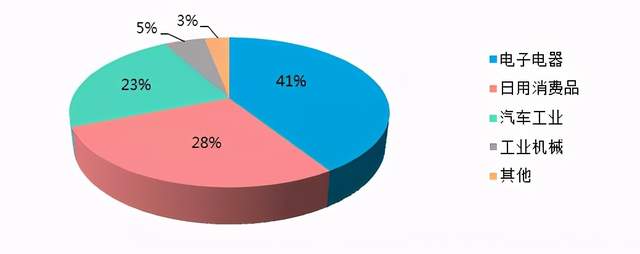
The upstream of the POM industry chain is formaldehyde and paraformaldehyde, and the downstream is mainly electronic appliances, consumer goods, and automobiles. Among them, electronic appliances account for about 41%, daily consumer goods account for about 28%, automotive consumption accounts for about 23%, and industrial machinery It accounts for about 5%, and other downstream accounts for about 3%. Among them, the automobile industry is the field with the fastest growth and the greatest potential for POM consumer demand in the future.
Schematic diagram of domestic POM downstream consumption distribution
POM's domestic consumer market is mainly concentrated in East China and South China. Among them, Zhejiang has the largest plastic distribution center in China, and the most comprehensive plastic application industry in the country is gathered in the region. The industry is widely distributed and used in large quantities; Jiangsu and Shanghai gather most of the middle and high-end industries such as electronic appliances in East China; Dongguan City, Guangdong is The main plastic raw material distribution and distribution areas, three large plastic raw material markets, and the surrounding townships have a large demand; Shenzhen has a developed electronics industry, which has a great impact on POM consumer demand; Guangzhou's industry integrates world-class brand appliances and sanitary wares. Automobile and motorcycle manufacturing base; Foshan City has strong plastic distribution and circulation; Fujian has a world-class toy, bathroom, and clothing accessories production base, and the industrial distribution is relatively dense. In addition, there are still some POM consumer markets in North China, mainly small and medium-sized industries. Due to short transportation distances, there are certain advantages in cost, and close to ports, the flow of goods is relatively convenient.
my country's current production capacity is 410,000 tons/year
At present, there are nearly 20 POM industrialized production enterprises in the world. According to statistics, the global POM production capacity is about 1.8 million tons/year, and the average POM production capacity accounts for about 12% of the total production capacity. Japan's Asahi Kasei Co. produces part of the homopolyoxymethylene, and all domestic and foreign companies produce all the copolymers.
Foreign POM production capacity is mainly distributed in Western Europe, Japan, South Korea, and the United States. Companies such as DuPont and Celanese in the United States, BASF in Germany, Asahi Kasei and Polyplastics in Japan have layouts.
China is the world's major POM producer. The current domestic POM production capacity is 550,000 tons/year, including 8 domestic POM companies and 2 Sino-foreign joint ventures. The production capacity is relatively scattered, such as Chongqing, Yunnan, Henan, Inner Mongolia, Jiangsu, Ningxia, Shandong, Shanghai, Tianjin and Hebei all have production facilities. Among them, the production capacity is 410,000 tons/year, Shanghai Bluestar’s 60,000 tons/year and Tianjin Bohua Yongli’s 40,000 tons/year production facilities are in a state of suspension. Among the three production lines in Tianye, Inner Mongolia, there is only one 20,000 tons/year. Years of installation drive.
POM patents at home and abroad mainly include Hong Kong Fuyi, South Korea P&ID, Poland ZAT, DuPont, BASF, American Celanese, Japan Polyplastics, and Japan Asahi Kasei. Among them, Hong Kong Fuyi and South Korea P&ID companies are the main transfers of domestic technology.
Statistics of major domestic POM manufacturers and production capacity 10,000 tons/year
Domestic companies urgently need to increase R&D investment in modified high-end materials
At present, the problems of overcapacity in the low-end and mid-to-high-end POM products in my country are still prominent, and more than 300,000 tons of products need to be imported each year. Especially in the high-value-added auto parts industry and high-end electronics and electrical appliances industry, domestic POM is rarely entered. Or because the threshold is high, the entry requirements are not met. In 2020, the domestic apparent consumption of POM is about 610,000 tons, of which the import volume will reach 339,500 tons, and the degree of foreign dependence will be as high as 55.70%.
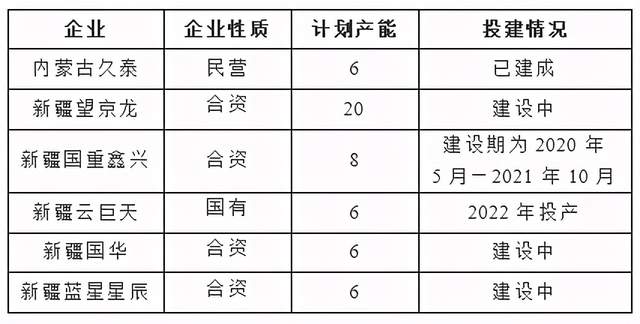
From 2021 to 2023, my country’s new POM production capacity totals 520,000 tons/year, mainly concentrated in areas rich in coal resources such as Xinjiang and Inner Mongolia. Sufficient coal can be used to produce methanol, which can then be used to produce formaldehyde.
Statistics of new domestic POM production capacity from 2021 to 2023 10,000 tons/year
In the long run, the domestic POM market has broad prospects, and with the continuous development of the domestic automobile industry, electronic appliances and other industries, the demand for POM will further expand. With the gradual release of my country’s POM production capacity, the future production of new production capacity will promote the conversion of new and old kinetic energy in the industry, accelerate the elimination of outdated low-end production capacity, improve product competitiveness, enrich application fields, and increase foreign exports while meeting our domestic needs.
However, if you want to enhance the market competitiveness of domestic POM, manufacturers must not only cut expenditures, but also increase revenue. They should attach importance to extending the POM industry chain, increase R&D investment in modified high-end POM materials, break technical barriers, strengthen industry exchanges, and resolve constraints The key technical difficulty of high-end POM production, the production of high-end products, will gain a place in the fierce market competition in the future.