global@hmeonline.com
Mon to Fri 09:00 – 17:30






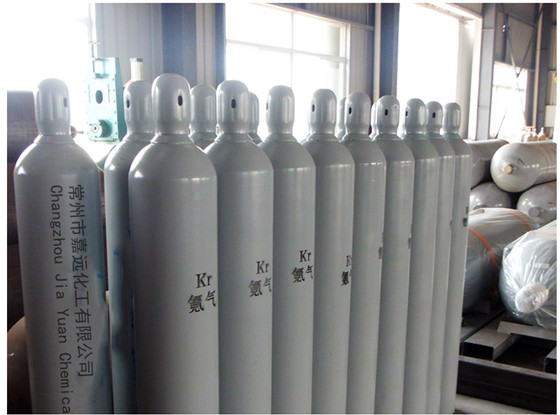
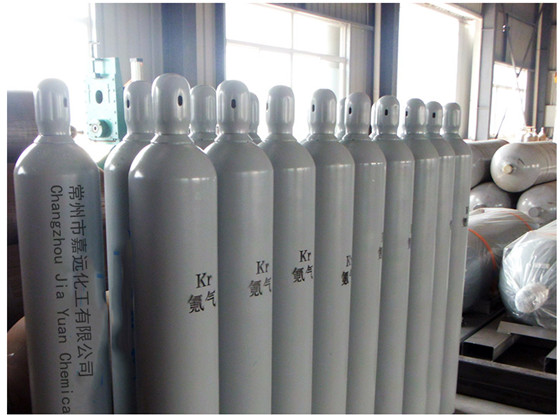
Krypton is a chemical element with the symbol of Kr. The elemental gas is colorless, odorless and tasteless inert gas. When krypton discharges, it presents a yellow-green glow [1]. It contains trace amounts in the atmosphere and can be separated from the liquid air by fractionation. The electric bulb injected with krypton gas is a very bright light source and is often used to make fluorescent lamps. [2] Like other inert gases, krypton is extremely inert in chemical properties and is not easy to react with other substances.
It is widely used in electronic industry, electric light source industry, gas laser and plasma flow. The bulb filled with pure krypton gas has the advantages of high luminous efficiency, small size, long service life and low power consumption compared with the bulb filled with argon of the same power.
Specification
| CAS number | 7439-90-9 |
| Atomic volume (cm ³/mol) | 38.9 |
| Content of elements in seawater (ppm) | 0.00008 |
| Content in the crust (ppm) | 0.00001 |
| Melting point (℃) | -156 |
| Boiling point (℃) | -153 |
| Gas density | 3.736 G/L (0,100 kPa) |
| There is about krypton in 100 liters of air | 0.114ml |
| Critical temperature | 62.35℃ |
| Critical pressure | Critical pressure 5.500 kPa |
| The propagation velocity of sound in it (m/s) | 220 |
| Crystal structure | The grade cell is a face-centered cubic Kundian. |
| Atomic layer arrangement | 3d104s²4p⁶ |
| Unit cell parameters: | |
| a=570.6 pm | |
| b= 570.6 pm | |
| c=570.6 pm | |
| g= 90= | |
| β=90 | |
| Y=90° | |