global@hmeonline.com
Mon to Fri 09:00 – 17:30






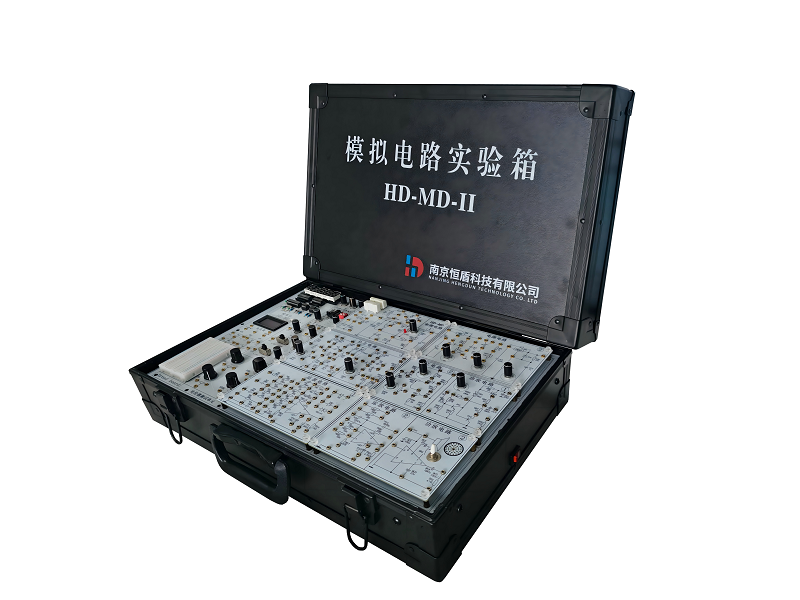
Product Overview
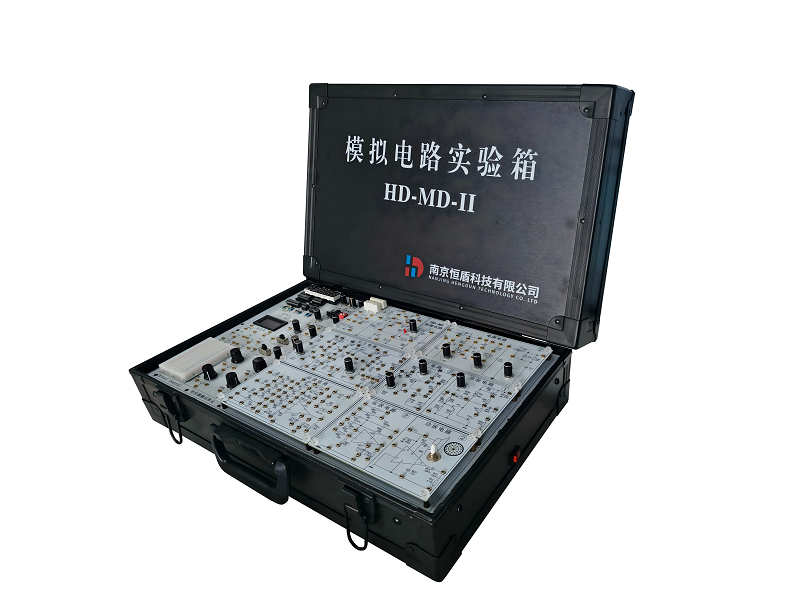
The new generation of analog circuit experiment boxes integrates analog circuit experimental units, high-quality signal generators, and specialized analog signal measurement instruments into a single box, creating a functionally integrated advanced experimental environment for users and bringing about innovative changes in the teaching and experimental model of analog circuits. By integrating new measurement and analysis methods with the experimental platform, the teaching experiment content is more comprehensive and complete, and the equipment is more durable, easy to maintain, and easy to operate, enhancing student learning and experimental effectiveness. It can also significantly reduce the demand for laboratory space, providing optimal experimental equipment for schools to establish high-end analog circuit laboratories.
Features
1. The system utilizes an advanced, integrated structure, combining analog circuit design and experimental units, signal generators, and specialized analog signal measurement instruments. This significantly improves student experimental efficiency and enhances their innovative design, problem analysis, and problem-solving abilities. The experimental platform utilizes a baseboard and modular design for ease of use, upgrades, and maintenance, ensuring equipment reliability and stability.
2. Utilizing a novel circuit construction method, the system's experimental units provide the key components for constructing simulated experimental circuits. Students can quickly construct experimental circuits by selecting and switching short-circuiting blocks and connecting a small number of wires. Some circuits also allow for convenient integration of new components, making circuit construction flexible and efficient while also fostering the development of students' design, analysis, and synthesis skills.
3. The system uses a high-quality voltage-stabilized power supply with excellent performance in resisting short circuits and overcurrent, avoiding possible damage during the experiment and making the system reliable and safe.
4. The experimental platform provides the signal source (built-in) required for the experiment with a rich variety of signal source waveforms. It also has a built-in frequency display function that can measure the signal source frequency with intuitive readings; and a built-in voltmeter that can measure positive and negative voltages.
5. All experimental modules on the experimental platform utilize standard silkscreen printing, along with schematics and symbols, to facilitate students' understanding of circuit composition and operating principles. The platform's operability and adjustment components utilize high-quality, hand-twist potentiometers, which are both durable and easy to operate. The platform's power and signal output ports utilize locking jacks, allowing for wire leads. A breadboard is also provided, allowing students to build their own circuits based on the experimental content. This approach fosters innovative thinking and hands-on skills.
Experimental courses can be offered
Experiment 1: Single-stage amplifier circuit
Experiment 2: Two-stage amplifier circuit
Experiment 3: Negative Feedback Amplifier Circuit
Experiment 4: Emitter Follower
Experiment 5: Differential Amplifier Circuit
Experiment 6: Proportional Sum Operation Circuit
Experiment 7: Integral and Differential Circuits
Experiment 8: Waveform Generator Circuit
Experiment 9: Voltage Comparator
Experiment 10: IC Circuit RC Sine Wave Oscillator
Experiment 11: Integrated Power Amplifier
Experiment 12: Transistor Power Amplifier Circuit
Experiment 13: Rectification, Filtering and Parallel Voltage Regulator Circuit
Experiment 14: Series Voltage Regulator Circuit
Experiment 15: Integrated Voltage Regulator
Experiment 16: LC Oscillator
Experiment 17: Complementary Symmetrical Power Amplifier
Specification