global@hmeonline.com
Mon to Fri 09:00 – 17:30






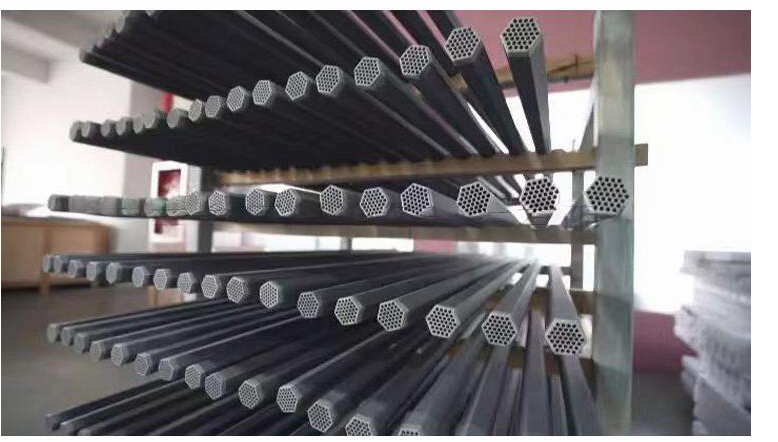
Introduction:
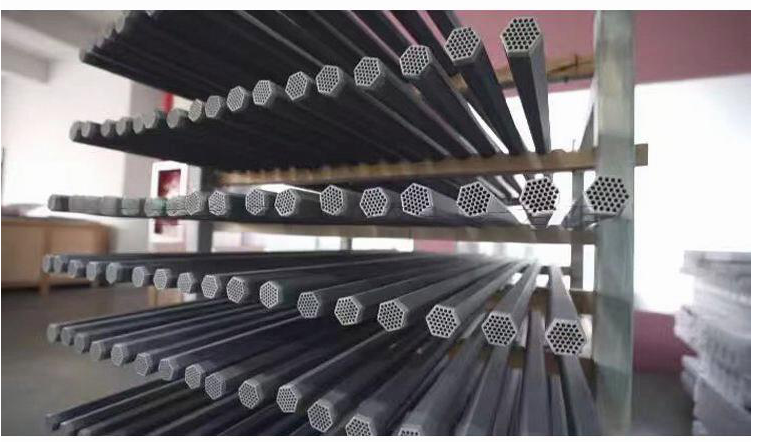
Ceramic tubular membranes are a high-performance membrane technology used for liquid or gas separation and filtration. These membranes are typically made of ceramic materials and have a microporous or nanoporous structure, enabling selective transmission of specific molecules or ions while excluding larger particles and impurities. Ceramic tubular membranes are widely used in water treatment, chemical industry, food and beverage, biopharmaceuticals, etc., for purifying and concentrating fluids to enhance product quality and production efficiency.
These membranes are renowned for their outstanding corrosion resistance, high-temperature and high-pressure performance, long lifespan and efficient separation capabilities. They are suitable for various demanding industrial and environmental conditions. Moreover, ceramic tubular membranes can extend their service life and reduce maintenance costs through cleaning and regeneration.
Principle:
The separation principle of ceramic tubular membranes is based on the micro-pore or nano-pore structure on the membrane surface. These pores allow specific molecules or ions to pass through while preventing the passage of larger particles, impurities, and harmful substances. Liquids or gases flow through the membrane inside the ceramic tube, separating out pure products while retaining the waste on the membrane surface.
Advantages:
§High corrosion resistance: Ceramic materials have excellent corrosion resistance and are suitable for handling corrosive substances.
§High temperature and high pressure performance: Applicable for applications under high temperature and high pressure conditions.
§Long lifespan: Ceramic tubular membranes have a long service life and are less prone to damage or deformation.
§Efficient separation: Capable of achieving efficient separation and filtration.
§Reusability: Through cleaning and regeneration, the lifespan can be extended and maintenance costs can be reduced.
Type of ceramic membrane module:
Membrane module form: 1 core, 3 cores, 7 cores, 12 cores, 19 cores, 25 cores, 37 cores, 55 cores, 99 cores
Material of membrane module housing: SUS304, SUS316 (L) stainless steel
Sealing material: Silicone rubber, Fluorine rubber, Ethylene propylene diene monomer rubber
Nominal pressure: 1.0 or 1.6 MPa
Optional membrane length: 1200 - 1178 - 1000 mm
Connection method: Flange, clamp connection
Specification
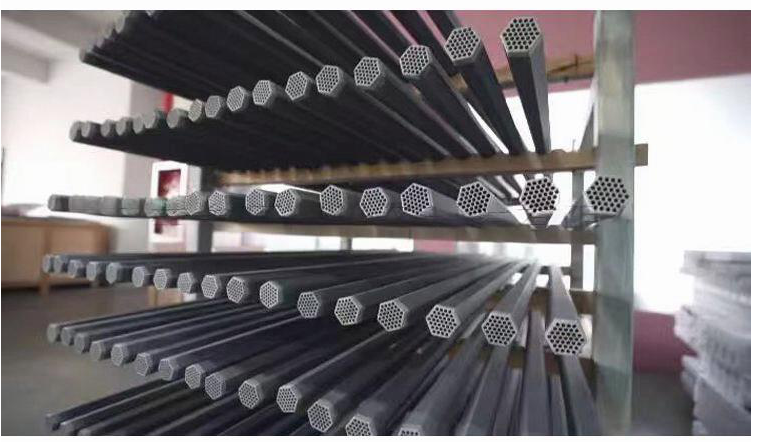
specifications and models
| External diameter :25mm,length :250mm | External diameter :25mm,length:178mm | External diameter:41mm,length:1000mm | ||||||||
| Channel shape | 19 channel | 23 channel | 7channel | 8channel | 19channel | 23channel | 49channel | 19channel | 25channel | 37channel |
| Channel diameter | 3.5mm | 3.5mm | 6mm | 6mm | 3.5mm | 3.5mm | 2.5mm | 6mm | 5.5mm | 3.6mm |
| membrane area | 0.05m2 | 0.07m2 | 0.16m2 | 0.2m2 | 0.25m2 | 0.35m2 | 0.5m2 | 0.35m2 | 0.47m2 | 0.42m2 |
| Membrane tube bursting pressure:90Bar,Membrane support structure:TiO2,film: TiO2/ZrO2 | ||||||||||
| Cutting molecular weight (membrane pore diameter) | microfiltration | 0.14um, 0.2um, 0.45um, 0.8um, 1.4um | ||||||||
| ultrafiltration | 15KD, 50KD, 150KD, 300KD | |||||||||
| Fine ultrafiltration | 1KD, 3KD, 5KD, 8KD | |||||||||