- Agriculture / Food
- Apparel / Textiles / Accessories
- Auto / Transportation
- Bags / Shoes / Accessories
- Electronics
- Electrical Equipment / Components / Telecoms
- Gifts / Sports / Toys
- Health / Beauty
- Home / Lights / Construction
- Machinery / Industrial Parts / Tools
- Metallurgy / Chemicals / Rubber / Plastics
- Packaging / Advertising / Office
ceramics
-
Ceramic filter plate
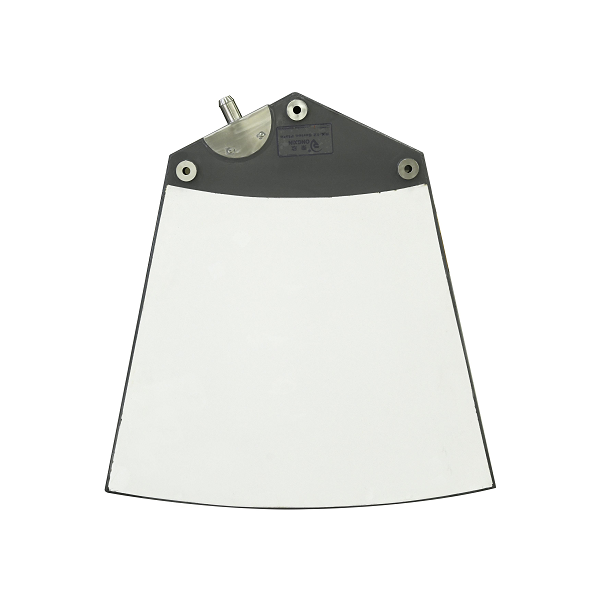
Ceramic Filter Plate is a kind of large porous ceramic disc which is fired by inorganic membrane making technology. It has following characteristics: large filter area, high intensity and even aperture. Besides, the aperture size can be adjusted according to actual demands. The basic material is alumina, it has good resistance to acid and alkali. After a period of application, the Ceramic Filter plate can be cleaned by cycle reverse cleaning, ultrasonic and chemical cleaning agent and so on, to let the plates work with high efficiency.
Regarding firing process, traditionally the ceramic plate is consisted of two layers of plates which are glued together to form inner channels.But after long term running, the glue will block the pores to cause "flower spots"on the surface of the plates.
Considering this phenomenon, our company independently developed a new technology.Now the ceramic plate is poured in one mould as a whole(We select a kind of special material,when firing under high temperature, this material is volatilized to form the inner channels.)Thus, the"flower spots"will be avoided,also the ceramic plates will have higher strength and not easy to be broken.
Recently, for mine production decreased obviously after several times ore absorption,our company developed a new type of membrane surface.The porosity of the new membrane can reach 55.60%, the microporous inwalls are smooth, and the tiny particles can pass smoothly in ore absorption process, so the jams will be reduced better. Meanwhile,after long-term use and backwash, the regeneration ability is obvious, the service life is longer,so as to achieve the maximum efficiency of plate surface,and improve the output
Technical Date of separator machine
1.Filter flux(water pressure0.1Mpa): 1200-1800kg/h.m2
2.Recoil atmospheric pressure(in damp environment): the minimum is 0.6Mpa
3.Back wash pressure:the maximum is 0.3Mpa
4.Combined cleaning pressure of ultrasonic and chemical agent:the maximum is 0.2Mpa
5.Pore diameter range of membrane surface: 0.1µm-15µm
6.Dry weight of processed materials: 0.6-1.6t/h.m2 -
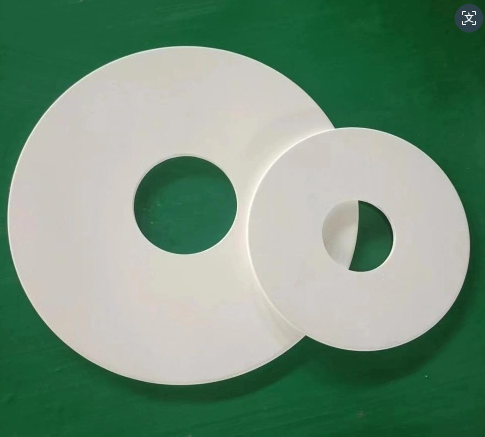
Dish ceramic membrane
Product performance:
Ceramic membrane is a high temperature sintered Ceramic Filter material with porous structure, such as alumina, silicon carbide and mullite. The porous support layer, transition layer and microporous membrane layer are asymmetrically distributed, and the filtration accuracy covers microfiltration, ultrafiltration and even nanofiltration. Ceramic membrane filtration is a "cross-flow filtration" form of fluid separation process: the raw material liquid flows at high speed in the membrane, and the clarified penetrant containing small molecular components passes through the membrane in the vertical direction under the pressure drive, and the turbidated concentrated liquid containing large molecular components is trapped by the membrane, so that the fluid can achieve the purpose of separation, concentration and purification.
The ceramic membrane tray can cope with all the wastewater or materials that can be treated by traditional filtration methods, separating particles, colloids, microorganisms, viruses, macromolecules, etc., from contaminated water, but it is more recommended for challenging feed liquid systems, such as high viscosity fermentation liquid or high solid content and high concentration wastewater systems: Excellent pollution resistance, chemical resistance, heat resistance, stable operating flux.
The new concentration filtration equipment effectively combines the principle of centrifuge and ceramic membrane, which is an enhanced membrane separation technology. The membrane usually does not decay, is less affected by the concentration of the feed liquid, and the continuous and stable filtration time is long; It can effectively prevent the blockage of the filter membrane and ensure the normal filtration.
Why can the disc concentrated filter membrane replace the ceramic membrane?
Traditional tangential flow membrane filtration (cross-flow filtration, tubular membrane, etc.) is unable to help high-viscosity fluids, mainly because the membrane channel is narrow, let alone the membrane surface fouling, and even before that, the flow channel has been blocked. Even after repeated cleaning, or even manual cleaning, it can only be reluctantly dealt with in the end.
The reason why the new rotary membrane filtration concentration is so good at handling high-viscosity fluids is largely due to its completely different structure from previous filtration systems.
The new membrane adopts the disk-type design, and the loaded membrane will rotate with the high-precision axis driven by the motor to become a "rotating membrane", generating high shear force and turbulence on the surface of the membrane. The cross-flow velocity of 7m/s can remove the pollution on the surface of the membrane in a long time, so that the filter cake layer on the surface of the filter membrane is controlled in a very thin range, avoiding blockage and maintaining a stable operating flux.
Advantages: high separation efficiency, good stability, easy operation, energy saving and environmental protection, low cost, wide range of application.
Product use:
Food industry: spices, beer, red wine, condiment filtration concentrate, fruit and vegetable deep processing, fruit juice, beverage, milk, vegetable oil and other solid-liquid separation, clarification filtration
Pharmaceutical Industry: Solid-liquid separation of bacterial fermentation liquid, traditional Chinese medicine extraction liquid solid-liquid separation, biological fermentation liquid solid-liquid separation, cell residue liquid solid-liquid separation, crystalline mother liquid solid-liquid separation, insoluble protein filtration and concentration, calcium carbonate, calcium lactate, calcium citrate solid-liquid separation, plasma, gelatin and other high value-added products dehydration, solid-liquid separation, Concentrate and purify enzymes, amino acids, vitamins and antibiotics, separate blood and plasma, etc.
Petroleum and chemical industry: graphene slurry washing, filtration, concentration, silica, zirconia, oxidation state, alumina and other nano, micron powder concentration filtration, electroplating wastewater treatment, petrochemical industry refractory wastewater treatment, semiconductor industry wastewater treatment
In the field of oil and gas: ceramic membrane can also have a good removal effect on grease wastewater. Ceramic membranes are very resistant to emulsified oils and do not need to be replaced as frequently as organic membranes, so they are also very suitable for the treatment of oily wastewater.
In the field of seawater desalination: ceramic membrane as a pretreatment unit, can remove colloidal suspended matter and macromolecular organic matter, so as to ensure the stability of effluent water quality, and make it better used for reverse osmosis; Ceramic membranes are well suited for desalination and are more resistant to the effects of red tides and algae than organic membranes.
Groundwater treatment: Another application of ceramic membranes in the municipal sector is groundwater treatment in Middle Eastern countries, especially in Saudi Arabia and Iran. As a pretreatment unit of reverse osmosis system, it can be used to remove iron and radium from high temperature water.
Environmental protection industry: landfill leachate treatment, high-difficulty wastewater, pharmaceutical wastewater, production water reuse, oily wastewater, dye, paint treatment, papermaking wastewater, textile wastewater treatment. -
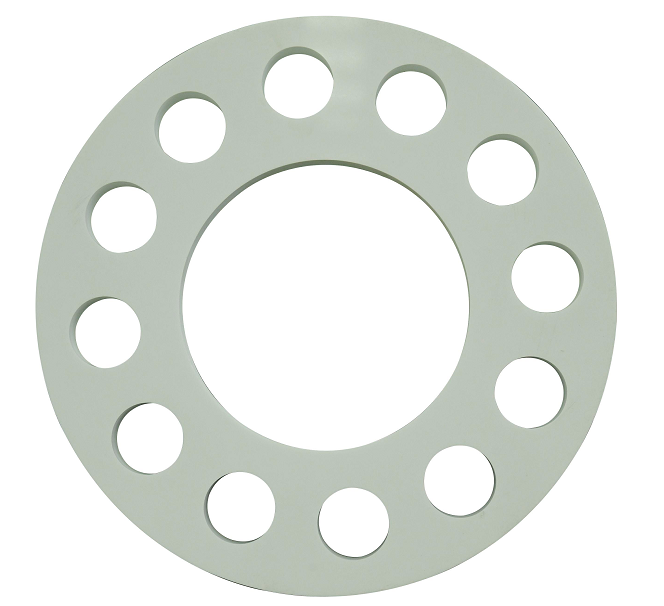
Ceramic friction ring
Main functions
As the rotating sealing and friction contact interface between the filter plate and the transmission/distribution mechanism, it maintains the system vacuum level and reduces medium leakage, ensuring continuous and stable solid-liquid separation.
As the bearing and sealing component of the distribution head, it cooperates to achieve the channel switching for suction/counterflow conditions, ensuring that the filtrate is discharged along the set path and the filter plate is backwashed.
In some models, it also performs the function of filtrate diversion, allowing the filtrate to smoothly enter the vacuum tank through the friction ring (friction disc) and be discharged, thereby improving the efficiency of liquid discharge and backwashing.
Cooperation with related components
With ceramic filter plates: The filter plate is the core filtering medium of the equipment (porous ceramic, with pores ranging from 0.1 to 10 μm), while the friction disc does not directly perform filtration but provides stable sealing and channel conditions.
With distribution heads/distributors: The friction disc (friction disc) and the distribution head work together to complete the cycle switching of vacuum suction and counterflow, which is a key link in maintaining the filtration-cleaning cycle.
With scrapers: The discharge area is scraped off by the scraper, and the friction disc ensures that the sealing and channel conditions during the scraping and backwashing stages are not affected, reducing secondary entrainment and leakage.
With agitators: The agitator prevents the slurry from settling, while the friction disc maintains the sealing and channel stability during the drum rotation, jointly ensuring continuous operation. -
Gasification plate
Brief Introduction:
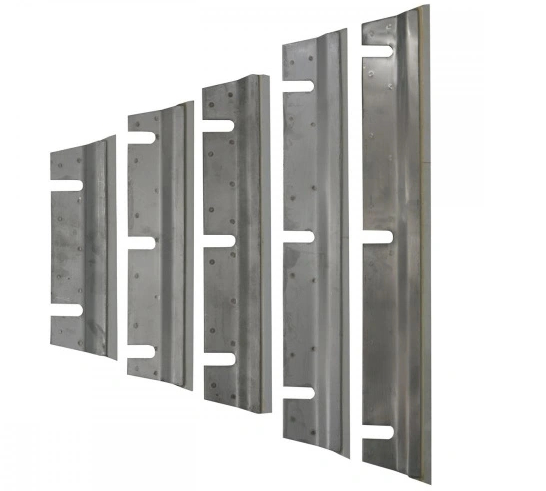
Gasification board or Gasification Plate or gasification groove is an auxiliary part of intermediate bunker, ash bucket, flat-based warehouse and cone-based warehouse. It is usually installed at the bottom of material storage warehouse or one side of ash bucket. By connecting preheated air during unloading, this equipment can fluidize powdery material which enhances fluidity of material. This will smoothen the unloading process and avoid particles arching or bridging.
Manufacturing Technique of Gasification Equipment for sale:
The whole set of gasification equipment consists gasification board which is made by sintering and forming carborundum, box and connecting flanges. Rongxin gasification board has good permeability and abrasion resistance.
Groove surface is acid pickled and galvanized. Groove is made by one-step forming and molding process to ensure good sealing and no air leakage with the box and connecting parts. There is a shaping adjustment before assembling to eliminate any welding deformation and interior stress, also to ensure smooth and straight bottom and flange connecting surfaces. Gasification board and box are assembled with high temperature resistant sealing glue and they are oxidation and rust resistant.
Model Sizing:
1. Determine quality of cover plates according to designed length(L).
2. Determine assembling matrix of chutes at the bottom of warehouse according to designed length(L).
3. We can produce different kind of gasification grooves or boxes (including round shaped) according to clients' specific requirements.
Technical Specification of gasification equipment for sale:
1. Material: SiC
2. Specific gravity:2.1g/cm3
3. Porosity: 48-48.5%
4. Micropore size: 40-60 microns
5. Thermal endurance: less than 400℃
6. Compressive strength: equal or greater than 810 kg/cm2
7. Rupture strength: equal or greater than 235 kg/cm2
8. Finishing requirements: Smooth surface, no dirt and evenly permeates air. -
Ceramic filter tube
Introduction:
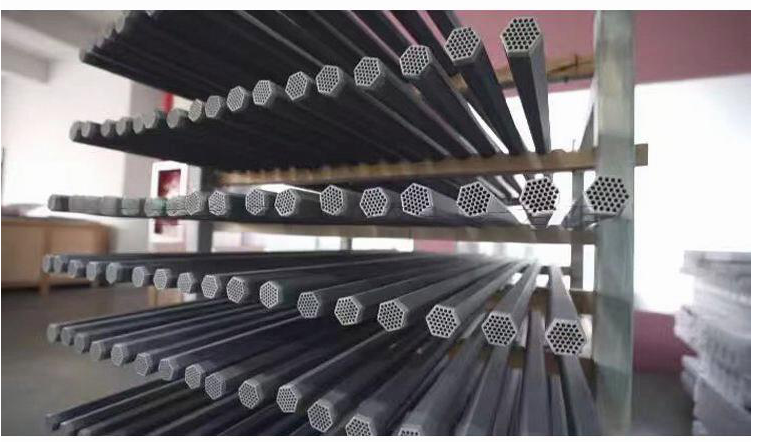
Ceramic tubular membranes are a high-performance membrane technology used for liquid or gas separation and filtration. These membranes are typically made of ceramic materials and have a microporous or nanoporous structure, enabling selective transmission of specific molecules or ions while excluding larger particles and impurities. Ceramic tubular membranes are widely used in water treatment, chemical industry, food and beverage, biopharmaceuticals, etc., for purifying and concentrating fluids to enhance product quality and production efficiency.
These membranes are renowned for their outstanding corrosion resistance, high-temperature and high-pressure performance, long lifespan and efficient separation capabilities. They are suitable for various demanding industrial and environmental conditions. Moreover, ceramic tubular membranes can extend their service life and reduce maintenance costs through cleaning and regeneration.
Principle:
The separation principle of ceramic tubular membranes is based on the micro-pore or nano-pore structure on the membrane surface. These pores allow specific molecules or ions to pass through while preventing the passage of larger particles, impurities, and harmful substances. Liquids or gases flow through the membrane inside the ceramic tube, separating out pure products while retaining the waste on the membrane surface.
Advantages:
§High corrosion resistance: Ceramic materials have excellent corrosion resistance and are suitable for handling corrosive substances.
§High temperature and high pressure performance: Applicable for applications under high temperature and high pressure conditions.
§Long lifespan: Ceramic tubular membranes have a long service life and are less prone to damage or deformation.
§Efficient separation: Capable of achieving efficient separation and filtration.
§Reusability: Through cleaning and regeneration, the lifespan can be extended and maintenance costs can be reduced.
Type of ceramic membrane module:
Membrane module form: 1 core, 3 cores, 7 cores, 12 cores, 19 cores, 25 cores, 37 cores, 55 cores, 99 cores
Material of membrane module housing: SUS304, SUS316 (L) stainless steel
Sealing material: Silicone rubber, Fluorine rubber, Ethylene propylene diene monomer rubber
Nominal pressure: 1.0 or 1.6 MPa
Optional membrane length: 1200 - 1178 - 1000 mm
Connection method: Flange, clamp connection