global@hmeonline.com
Mon to Fri 09:00 – 17:30






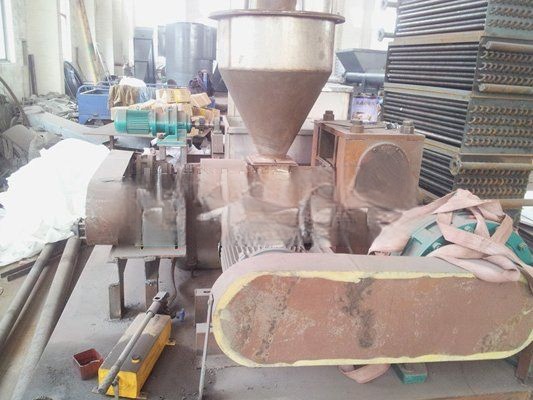
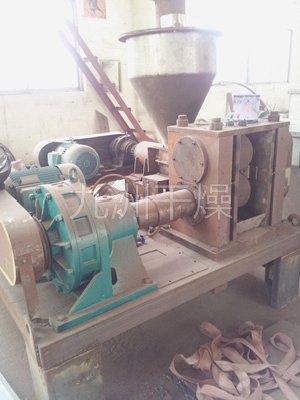
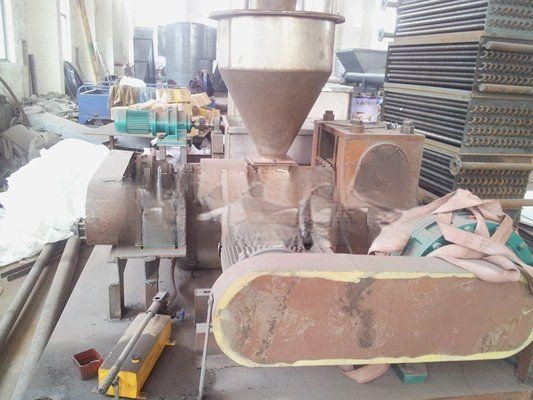
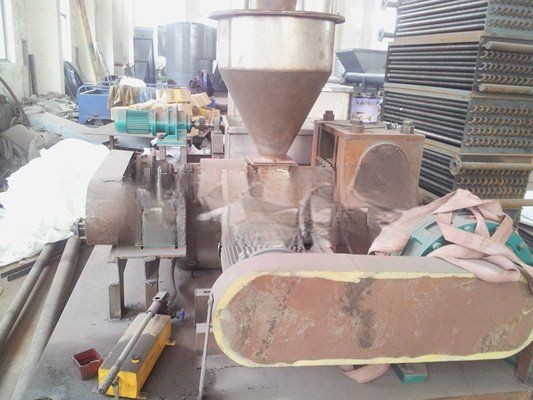
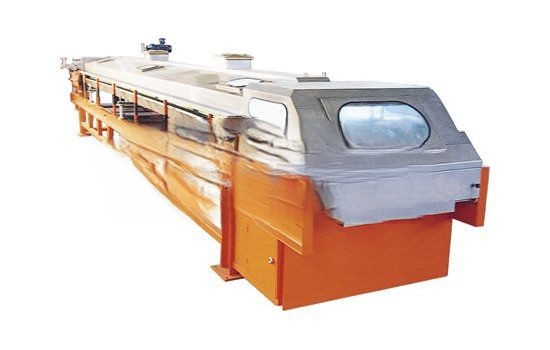
Extrusion granulation is a relatively new dry granulation process for producing compound fertilizers. Extrusion granulation was first applied to the granulation of potassium chloride in the field of fertilizers. The granular (1-4mm) potassium chloride required for blending fertilizers (BB fertilizer) is basically produced by extrusion. In recent years, extrusion granulation for the production of compound fertilizers has developed rapidly in China.
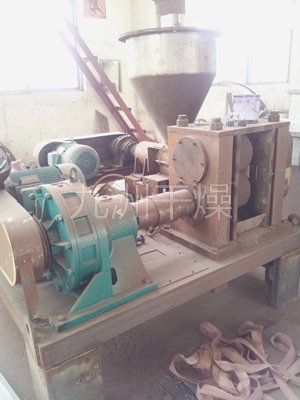
There are two forms of extrusion granulation: double-roller type and wheel-roller type. The double-roller type extrusion is first pressed into large pieces, and then broken into granules. This device has large capacity, high granule strength, and low energy consumption. Roll extrusion is widely used abroad. The wheel rolling type is directly made into a shape with grooves on the surface of the roller, and extruded into shaped particles at one time. When the product strength is low, it is sometimes necessary to add a binder. It is suitable for granular fertilizers such as organic fertilizers and compound fertilizers.
The principle of roller extrusion granulation is: the dry material is agglomerated into a dense and hard block (cake) under pressure, which is called the extrusion process; the cake is crushed and sieved to become a granular material called for the granulation process. The role of extrusion is to squeeze out the air between the particles, and to make the distance between the particles close enough to generate attractive forces such as van der Waals force, adsorption force, crystal bridge and embedded connection. Extruded granulated particles mainly rely on the strength of particles formed by the force between molecules.
Specification
| model | Press roller center distance | power |
| GZL-240 | 240 | 7.5-1.5 |
| GZL-360 | 360 | 22-45 |
| GZL-460 | 460 | 37-60 |
| GZL-580 | 580 | 45-90 |
| GZL-650 | 650 | 55-200 |
| GZL-730 | 730 | 90-315 |