- Agriculture / Food
- Apparel / Textiles / Accessories
- Auto / Transportation
- Bags / Shoes / Accessories
- Electronics
- Electrical Equipment / Components / Telecoms
- Gifts / Sports / Toys
- Health / Beauty
- Home / Lights / Construction
- Machinery / Industrial Parts / Tools
- Metallurgy / Chemicals / Rubber / Plastics
- Packaging / Advertising / Office
Drying Equipment
-
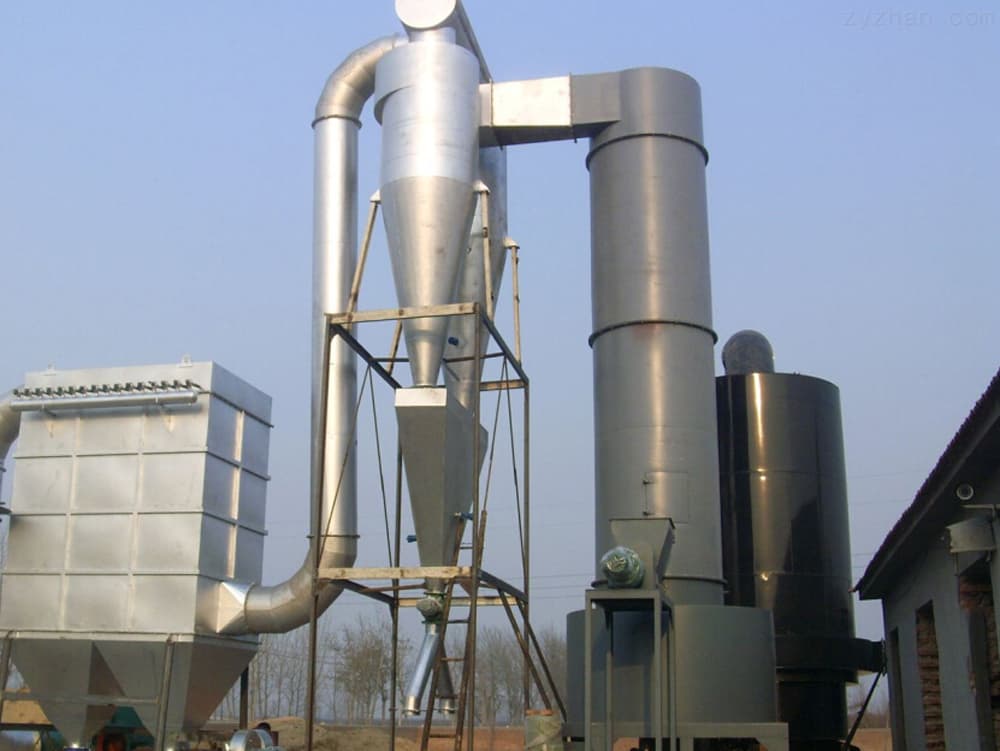
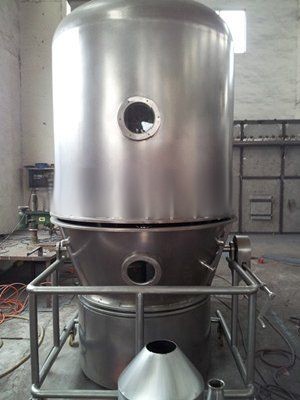
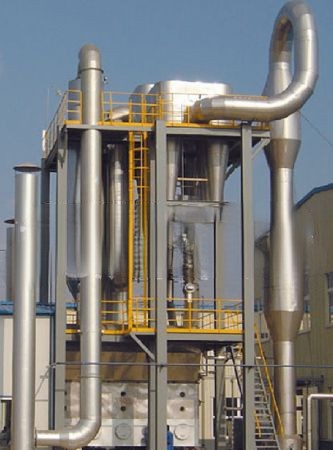
XSG Series Spin Flash Dryer
The spin flash dryer is a new type of high-efficiency fluidized drying equipment developed to overcome the low efficiency and high energy consumption of static drying. In the design process of this machine, it fully combines the characteristics of ordinary fluid drying such as airflow drying, and avoids weaknesses, so that the whole machine has a reasonable process structure and superior performance, and achieves the goal of high efficiency and low energy for fluidized drying.
MOQ:1 -
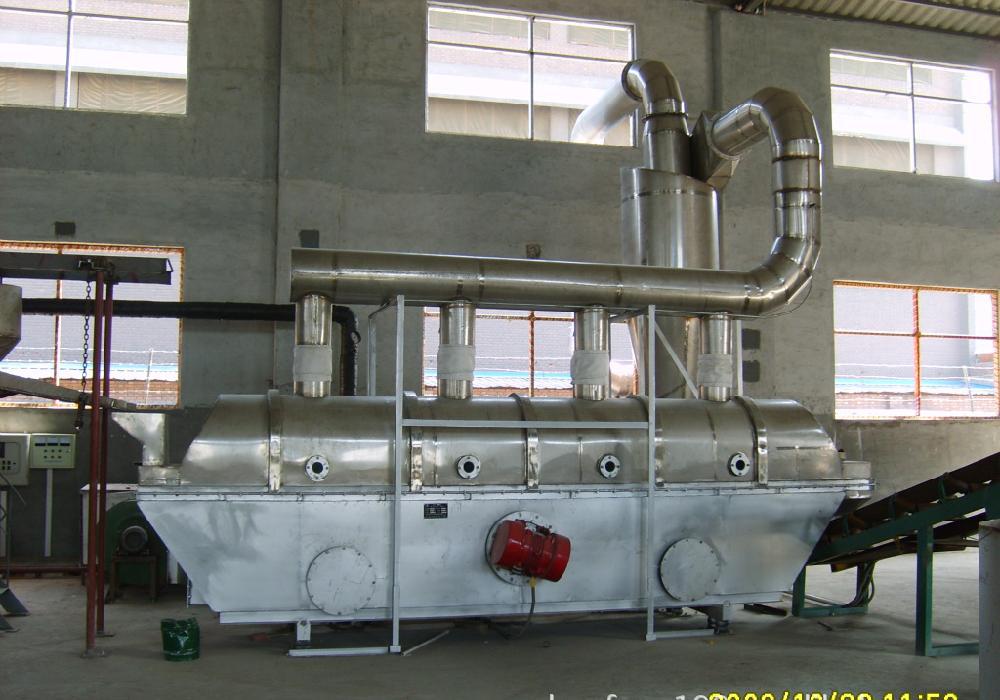
ZLG Series Vibrating Fluidized Bed
At present, it has been widely used in industrial sectors such as sugar refining, medicine, fertilizer, chemical industry, plastics, dairy products, salt industry and mining and metallurgy.
Continuous operation is possible with low function consumption.
Driven by a vibrating motor, it runs smoothly, is easy to maintain, has low noise and has a long service life.
MOQ:1 -
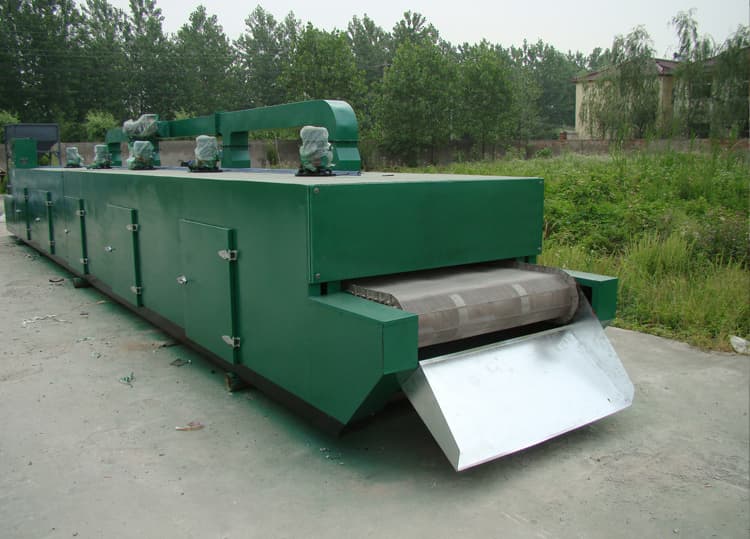
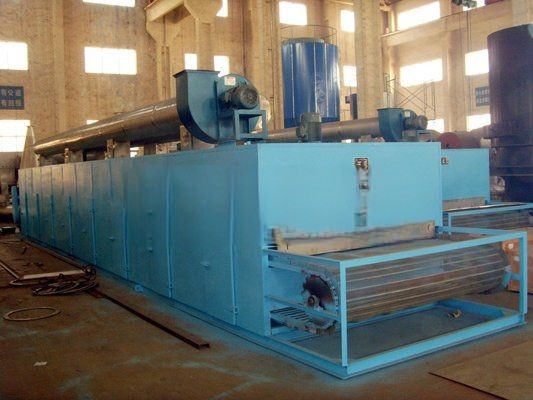
Dw Belt Dryer
A commonly used continuous drying equipment. Pass the material through the appropriate laying device, distribute the material evenly on the conveyor belt, pass through one or several heating units, heat the material evenly through the hot air heating and circulation system, and then dehumidify the material through the dehumidification system, so that the material Dries evenly.
It is especially suitable for dehydrated vegetables, catalysts, Chinese herbal medicines and other materials with high moisture content and high material temperature.
Steam, heat transfer oil and hot blast stove can be used to provide heat source.
MOQ:1 -
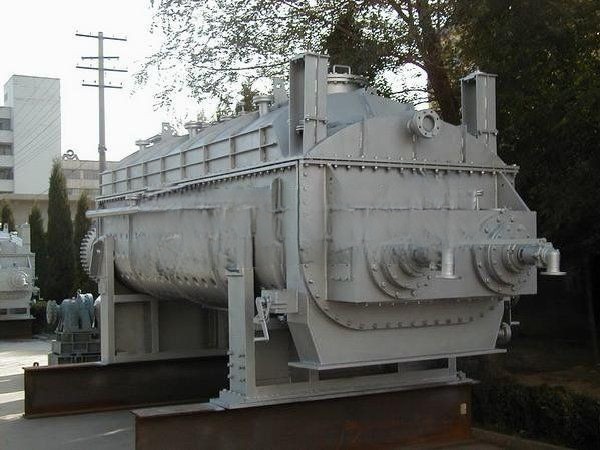
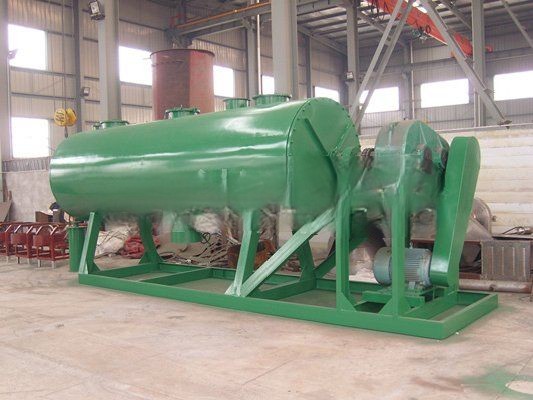
KJG hollow paddle dryer
Product introduction
This product can indirectly heat or cool paste, granular, powder and slurry materials, and can complete drying, cooling, heating, sterilization, reaction, low-temperature combustion and other unit operations. The special wedge-shaped stirring heat transfer blade in the equipment has high heat transfer efficiency and self-cleaning function of heat transfer surface.
working principle
Wedge hollow blades are densely arranged on the hollow shaft, and the thermal medium flows through the blades through the hollow shaft. The heat transfer area per unit effective volume is large, and the temperature of the heat medium ranges from - 40 ℃ to 320 ℃, which can be either water vapor or liquid: such as hot water, heat transfer oil, etc. Indirect conduction heating does not carry air away heat, and the heat is used to heat materials. The heat loss is only the heat dissipation to the environment through the insulation layer of the body. The heat transfer surface of wedge blade has self-cleaning function. The relative movement of the material particles and the wedge surface produces the washing effect, which can wash off the attached materials on the wedge surface, so that the clean heat transfer surface is always maintained during operation. The shell of the paddle dryer is Ω type, and two to four hollow mixing shafts are generally arranged in the shell. The shell has a sealed end cover and an upper cover to prevent the leakage of material dust and give full play to its role.
The heat transfer medium flows through the shell jacket and the hollow mixing shaft through the rotary joint. The hollow mixing shaft has different internal structures according to the type of heat medium to ensure the heat transfer effect.
Performance characteristics
◎ Low energy consumption of the pulp dryer: due to indirect heating, there is no large amount of air to carry away heat, and the outer wall of the dryer is also equipped with an insulating layer. For the slurry material, only 1.2kg of water vapor is needed to evaporate 1kg of water.
◎ The cost of the blade dryer system is low: there is a huge heat transfer surface in the unit effective volume, which shortens the processing time and reduces the size of the equipment. It greatly reduces the building area and building space.
◎ Wide range of materials to be treated: different thermal media can be used to treat both heat-sensitive materials and materials requiring high-temperature treatment. Common media include: steam, heat transfer oil, hot water, cooling water, etc.
It can be operated continuously or intermittently and can be applied in many fields.
◎ Low environmental pollution: do not use carrying air, and carry little dust and materials. The solvent evaporation of the material is small and easy to handle. For contaminated materials or working conditions requiring solvent recovery, closed-circuit circulation can be used.
◎ Low operation cost: small wear and low maintenance cost.
◎ Stable operation: due to the special compression-expansion mixing function of wedge-shaped blades, the material particles fully contact with the heat transfer surface. In the axial range, the temperature, humidity and mixing gradient of the material are very small, thus ensuring the stability of the process.
Applicable materials
The pulp dryer has been successfully used in food, chemical, petrochemical, dye, industrial sludge and other fields. The characteristics of heat transfer, cooling and stirring of the equipment enable it to complete the following unit operations: combustion (low temperature), cooling, drying (solvent recovery), heating (melting), reaction and sterilization. The mixing blade is also a heat transfer surface, which increases the heat transfer area per unit effective volume and shortens the treatment time. The heat transfer surface of wedge blade has self-cleaning function. The compression-expansion mixing function makes the materials mixed evenly. The material moves in a "piston flow" along the axial direction. In the axial range, the gradient of temperature, humidity and mixing degree of the material is very small. Low-temperature combustion can be achieved by using heat transfer oil as thermal medium slurry dryer. For example, calcium sulfate dihydrate (Ca2SO4 · 2H2O) is converted into calcium sulfate hemihydrate (Ca2SO4 · 1/22H2O) by combustion. Sodium bicarbonate (NaHCO3) is calcined and converted into soda ash (Na2HCO3), etc. Cooling medium, such as water and cooling brine, can be used for cooling. For example, the paddle type caustic soda cooler used in the soda industry replaces the old air cooling caustic soda cooler, saving energy and tail gas treatment equipment, and reducing operating costs. The main function of the drying equipment is not to use hot air, so that solvent recovery, energy consumption and environmental control are in an ideal state of easy treatment. It is particularly suitable for solvent recovery, flammable and oxidizable heat-sensitive materials. It has been widely used in fine chemical, petrochemical and dye industries. In the axial range, the uniformity of temperature, humidity and mixing degree makes the equipment can be used for heating or melting, or for some solid material reactions. It has been successfully used in compound fertilizer and modified starch industries. The pulp dryer can be used to sterilize food and flour. The large heating area in the unit effective volume quickly heats the material to the sterilization temperature, avoiding the change of material quality due to long-time heating. -
PLG disc continuous dryer
Product introduction
The disc continuous dryer is a conductive continuous drying equipment. Its unique structure and working principle determine that it has the characteristics of high thermal efficiency, low energy consumption, small floor area, simple configuration, convenient operation and control, and good operating environment. It is widely applicable to drying operations in chemical, pharmaceutical, pesticide, food, feed, agricultural by-product processing and other industries. It is highly praised in the use practice of various industries. Currently, it produces and manufactures three types of atmospheric pressure, airtight and vacuum, 1200, 1500, 2200 and 3000, A (carbon steel), B (stainless steel is uniformly distributed in the parts contacting with materials), C (on the basis of B, the steam pipeline, main shaft and support are added to be stainless steel, and the cylinder and cover are lined with stainless steel). Three kinds of materials, drying area 4~180m2, a total of hundreds of models of series products, and can provide matching kinds of auxiliary equipment, which can meet the needs of users for drying various materials.
working principle
The wet material is continuously added to the first layer of drying plate on the upper part of the dryer from the feeder. The rake arm with the rake blade rotates to make the rake arm rotate to make the rake blade continuously turn over the material. The material flows through the surface of the drying plate along the exponential spiral. The material on the small drying plate is transferred to the outer edge, and falls to the outer edge of the large drying plate below. The material on the large drying plate moves inward and falls into the following layer of small drying plate from the middle dropping hole. The large and small drying plates are arranged alternately up and down, so that the materials can continuously flow through the whole dryer. The hollow drying plate is filled with heating medium in the form of saturated steam, hot water and heat transfer oil. The heating medium enters from one end of the drying plate and exits from the other end. The dried material falls from the bottom drying plate to the bottom of the shell, and then is transported to the discharge port by the rake blade. Moisture escapes from the material and is discharged from the moisture discharge port on the top cover. The moisture of the vacuum disc dryer is discharged from the vacuum pump port on the top cover. The dry materials discharged from the bottom layer can be directly packed. By adding auxiliary machines such as fin heater, solvent recovery condenser, bag filter, dry material back-mixing mechanism, induced draft fan, etc., the drying capacity can be improved. The paste and heat-sensitive materials can be dried, and the solvent can be easily recovered, and the pyrolysis and reaction operation can be carried out.
Performance characteristics
(1) Easy regulation and strong applicability
◎ The drying process is expected by adjusting the thickness of the material layer, the rotation speed of the main shaft, the number of rake arms, the type and size of the rake blade.
◎ Each layer of drying plate can heat or cool the material by entering hot or cold media separately, and the material temperature control is accurate and easy.
◎ The residence time of materials can be adjusted accurately.
◎ The flow direction of the material is single, there is no backmixing phenomenon, the drying is uniform, the quality is stable, and there is no need to re-mix.
(2) Simple and easy to operate
◎ The start-up and shutdown operation of the dryer is very simple.
◎ After the feeding is stopped, the conveying material scale rake can quickly empty the material in the dryer.
◎ The inside of the equipment can be cleaned and observed carefully through the special large inspection door mirror.
(3) Low energy consumption
◎ The material layer is very thin, the rotation speed of the main shaft is low, the power required by the material conveying system is small, and the power consumption is low.
◎ Drying by heat transfer has high thermal efficiency and low energy consumption.
(4) Good operating environment, recyclable solvent, dust emission meets the requirements
◎ Atmospheric pressure type: due to the low air velocity in the equipment and the low humidity distribution in the equipment, the dust is difficult to float to the top of the equipment, so the tail gas discharged from the top moisture exhaust port contains almost no dust.
◎ Closed type: equipped with solvent recovery device, which can easily recover the organic solvent in the wet gas. The solvent recovery device is simple and has high recovery rate. For flammable, explosive, toxic and oxidizable materials, nitrogen can be used as the carrier gas for closed circulation to ensure safe operation. Especially suitable for drying flammable, explosive and toxic materials.
◎ Vacuum type: disc dryer operated under vacuum, especially suitable for drying heat-sensitive materials.
(5) Convenient installation and small floor area
◎ The dryer is delivered as a whole and transported as a whole. It only needs to be hoisted in place. It is very easy to install and locate.
◎ Due to the drying tray layout and vertical installation, the drying area is large and the floor area is small.
Applicable materials
Dry pyrolysis combustion cooling reaction sublimation
◎ Organic chemical products ◎ Inorganic chemical products ◎ Medicine, food ◎ Feed and fertilizer
Technical characteristics
(1) Drying tray
◎ Design pressure: generally 0.4MPa, up to 1.6MPa.
◎ Service pressure: generally ≤ 0.4MPa, up to 1.6MPa.
◎ Heating medium: steam, hot water, heat transfer oil and drying pan shall be heated with hot water when the temperature is 100 ℃, ≤ 0.4MPa saturated steam or superheated steam when the temperature is 100 ℃~150 ℃, heat transfer oil when the temperature is 150 ℃~320 ℃, and electricity, heat transfer oil, molten salt and other methods can be used when the temperature is > 320 ℃.
(2) Material transfer system
◎ Spindle speed: 1~10 rpm, electromagnetic or variable frequency stepless speed regulation.
◎ Rake arm: there are 2 to 8 rake arms fixed on the main shaft on each layer of drying plate.
◎ Rake blade: it is hinged on the rake arm and can keep in contact with the disc surface floating up and down. There are many forms.
◎ Rolling: For materials that are easy to agglomerate and need to be crushed, add rolling at the appropriate position to strengthen the heat transfer and drying process.
(3) The shell has three types: atmospheric pressure, airtight and vacuum
◎ Atmospheric pressure type: cylindrical or octagonal prism type, with integral and split structures. The main pipes of heating medium inlet and outlet can be inside the shell or outside the shell.
◎ Closed type: cylindrical shell, capable of withstanding 5Kpa internal pressure. The main pipes of heating medium inlet and outlet can be inside the shell or outside the shell.
◎ Vacuum type: cylindrical shell, with design pressure of 0.1Mpa, and heating medium inlet and outlet main pipes in the shell.
(4) Air heater
It is generally used when the evaporation capacity is large to enhance the drying efficiency. -
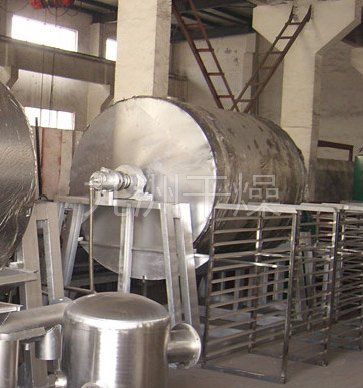
ZPG Vacuum Rake Dryer
Working principle
This machine is a novel horizontal intermittent vacuum drying equipment. The wet material is evaporated by conduction, and the scraper agitator is equipped with a scraper to continuously remove the material on the hot surface, and it is moved in the container to form a circulating flow. After the water evaporates, it is Vacuum pumps out.
Performance characteristics
◎This machine adopts a large-area interlayer heating method, which has a large heat transfer surface and high thermal efficiency.
◎The machine is equipped with stirring to make the material form a continuous circulation state in the cylinder, which further improves the heating uniformity of the material.
◎The machine is set to stir, so that the slurry, paste and pasty materials can be dried smoothly.
Applicable materials
◎Pharmaceutical, food, chemical and other industries to dry the following materials:
◎Suitable for slurry, paste, and powder materials;
◎Heat-sensitive materials that require low-temperature drying;
◎Easily oxidized, explosive, highly irritating, and highly toxic materials ;
◎Materials requiring recycling of organic solvents. -
GFG Series High Efficiency Boiling Dryer
Working principle
After the air is heated and purified, it is introduced from the lower part by the induced draft fan and passes through the perforated plate of the hopper. In the working room, fluidization is formed by stirring and negative pressure, and the water is quickly evaporated and taken away with the exhaust, and the material is quickly dried.
Performance characteristics
◎ The fluidized bed is a circular structure to avoid dead ends.
◎The hopper is equipped with agitation to avoid the agglomeration of wet materials and the formation of channels during drying.
◎Using tipping and unloading, it is convenient, quick and thorough, and an automatic feeding and discharging system can also be designed according to requirements.
◎Sealed negative pressure operation, the airflow is filtered. Easy to operate and easy to clean.
◎The drying speed is fast and the temperature is uniform. The drying time of each batch is generally 20-30 minutes, depending on the material.
Applicable materials
◎Mechanism screw extrusion granules, oscillating granules, wet high-speed mixing granulation granules.
◎Drying of wet granules and powdery materials in medicine, food, feed, chemical industry and other fields.
◎Large particles, small lumps, sticky lumps and granular materials.
◎Konjac and other materials whose volume changes during drying. -
DW Single Layer Belt Dryer
Product Introduction
This machine is a through-flow continuous drying equipment, which is used for drying flake, strip and granular materials with good air permeability. For materials with high moisture content and high temperature, such as dehydrated vegetables and Chinese herbal medicines Especially suitable; this series of dryers have the advantages of fast drying speed, high evaporation intensity and good product quality. For dehydrated filter cake-like paste materials, they can also be dried after being granulated or made into rods.
Working principle
The material is evenly spread on the mesh belt by the feeder, and the mesh belt is generally made of 12-60 mesh stainless steel wire mesh, which is driven by the transmission device to move in the dryer. The dryer is composed of several units, each unit circulates hot air independently, part of the tail gas is discharged by a special exhaust fan, and the exhaust gas is controlled by a regulating valve. The hot air passes through the mesh belt covered with materials from bottom to top or from top to bottom to complete heat and The process of mass transfer takes away the moisture of the material. The mesh belt moves slowly, the running speed can be adjusted freely according to the temperature of the material, and the dried finished product falls into the receiver continuously. The upper and lower circulation units can be flexibly equipped according to user needs, and the number of units can also be selected according to needs.
Performance characteristics
◎The air volume, heating temperature, material residence time and feeding speed can be adjusted to achieve the desired drying effect.
◎Equipment configuration is flexible, mesh belt flushing system and material cooling system can be used.
◎ Most of the air is recycled, which saves energy a lot.
◎The unique air distribution device makes the distribution of hot air more uniform and ensures the consistency of product quality.
◎The heat source can be steam, heat conduction oil, electricity or coal (oil) hot blast stove.
Applicable materials
Dehydrated vegetables, pellet feed, monosodium glutamate, desiccated coconut, organic pigments, synthetic rubber, acrylic fibers, medicines, medicinal materials, small wood products, plastic products, aging and curing of electronic components, etc. -
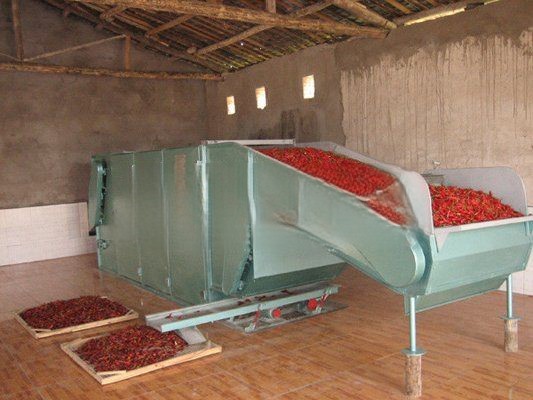
DWC Series Dehydrated Vegetable Belt Dryer
Product introduction
DWC dehydration dryer is a special equipment researched and developed on the basis of traditional mesh belt dryer, which has strong pertinence, practicability and high energy efficiency. It is widely used in the dehydration and drying of various regional and seasonal vegetables and fruits. Such as: garlic slices, pumpkin, konjac, white radish, yam, bamboo shoots, etc. When producing equipment for users, we design and manufacture suitable vegetable drying equipment for users according to the characteristics of the desired drying products, the user's process requirements, and combined with decades of accumulated experience.
Working principle
Vegetable dehydration dryer is composed of main components such as feeder, drying bed, heat exchanger and dehumidification fan. When the dryer is working. The cold air is heated by the heat exchanger, and a scientific and reasonable circulation method is adopted to allow the hot air to pass through the dried materials on the bed surface for uniform heat and mass exchange, and the hot air in each unit of the body is circulated by the circulation fan. , and then discharge the air with low temperature and high humidity, and complete the whole drying process smoothly and efficiently.
Performance characteristics
The drying area, air pressure, air volume, drying temperature and the speed of the mesh belt can be adjusted to meet the characteristics and quality requirements of vegetables.
According to the characteristics of vegetables, different technological processes can be adopted and necessary auxiliary equipment can be added.
Applicable materials It
can meet the drying and mass continuous production of vegetable materials such as roots, stems, leaves, strips, blocks, flakes, and large granules, while retaining the nutritional content and color of the products as much as possible.
Typical materials for drying are: garlic slices, pumpkins, carrots, konjac, yams, bamboo shoots, horseradish, onions, apples, etc. -
DW Multi-Layer Belt Dryer
Product Introduction
DW series multi-layer belt dryer is a continuous drying equipment for batch production. It is used for drying flake, strip and granular materials with good air permeability. It is especially suitable for materials with high moisture content and high material temperature; this series of dryers have the advantages of fast drying speed, high evaporation intensity and good product quality. For paste materials such as dehydrated filter cakes, they need to be granulated or processed Dry in strips.
Performance characteristics
DWB series multi-layer belt dryer is suitable for large-scale production of difficult-to-dry materials with low drying rate. The equipment has compact structure, small footprint, simple operation, convenient maintenance and stable operation. It can be designed into different hot air circulation drying forms according to the drying characteristics of materials. It is an extension and improvement of hot air circulation oven and is widely used in metallurgical additives, chemical industry, food, packaging and other fields. With the advancement of enterprise technology and the improvement of product technology content, the multi-layer belt dryer has the ability to meet the needs of large-scale production, diversification, centralized control and continuous production. It has the advantages of high efficiency, energy saving and easy management. -
QG, JG, FG Airflow Dryer
Product overview
QG series pulsed airflow dryer is a large batch of drying equipment. It adopts the principle of instant drying, uses the rapid movement of heat-carrying air to drive wet materials, and makes wet materials suspend in the hot air, which strengthens the entire drying process. , the rate of heat and mass transfer is improved, and the unbound water can be almost completely removed from the air-dried material (for example, the water content of the feed material such as starch is ≤40%, and the finished product output can be 13.5%), and the dried The material will not deteriorate, and the output can be significantly improved compared with ordinary dryers, and users can obtain higher economic benefits in a short period of time.
Product features
QG airflow dryer is suitable for drying and dehumidifying powdery materials in pharmaceutical, chemical, food, building materials, plastics and other industries, such as: starch, fish meal, salt, distiller's grains, feed, gluten, plastic resin, mineral powder, coal powder , sugar chloric acid, A·S·C benzoic acid, 2·3·acid, polychloroacetic acid polypropylene, sodium sulfate, sodium pyrosulfite and other materials drying.
Our company consults externally on airflow drying equipment, and designs and manufactures non-stereotyped airflow dryers on behalf of us.
Scope of application
The company manufactures QG airflow drying equipment, introduces advanced technology and equipment from the United States, and has reached the international first-class advanced level through unique design. Less, versatile, is the ideal modern equipment.
Working principle
Airflow drying can quickly remove water (mainly surface water) from easily dehydrated particles and powdery materials. In air drying, the quality of the dried product is controlled due to the short residence time of the material in the dryer. Our factory's enhanced airflow drying is composed of adding a set of intensifier whose speed can be adjusted steplessly on the basic type. The wet material enters the intensifier through the screw feeder and is fully mixed with the hot air flow, crushed and pushed by the rapidly rotating hammer. Next, the material is broken into fine particles, and moves toward the outlet while drying, and then enters the drying pipe under the suction of the wind, and is further dried evenly. Wet heavy particles that cannot be attracted by the wind continue to be crushed and dried until they can be picked up by the wind and enter the drying tube.
Main purpose
This machine is especially suitable for materials with relatively large moisture content, wet materials in the form of paste, and materials that cannot be dried by other airflow drying methods, such as: white carbon black, copolymers of vinyl acetate and vinyl chloride, cellulose acetate wadding, catalysts , CMC, CT-1 resin, gypsum, electrolytic manganese dioxide, ammonium anthraquinone sulfonate, fluorspar, diatomaceous earth, silica gel catalyst, bone meal, high territory, potassium perchlorate sulfonium drugs, synthetic resin, active gluten , activated clay, chemical filter cake, rutile diamond white powder, sebacic acid, copper sulfate, aluminum sulfate, sodium sulfate, calcium phosphate, phosphated starch, dyes, calcium citrate, coal slime, rice bran for bread , Clay, Clay Cement, Urea, Bentonite, Spherical Clay, Aluminum Hydroxide, Barium Hydroxide, Calcium Lactate, Food, Washed High Territory, Cyanuric Acid, Gypsum Oar, Lime, Biological Products, Carbon Black, Calcium Carbonate Slurry, Sludge residue, organic chemicals aluminum stearate, iron oxide, organic fuel, corn gluten feed, damp mud, mica powder, pharmaceuticals, pigments, potassium dichromate pulp, distiller's grains, etc. -
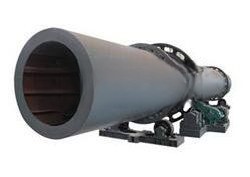
HZG Series Rotary Drum Dryer
Working principle
After the wet material is put into the dryer from one end, the material is evenly distributed and dispersed in the dryer under the stirring of the uniformly distributed lifting plate in the inner cylinder, and fully contacts with the hot air of the co-current (counter-current) to speed up the drying process. Heat, transferred to the driving force. During the drying process, under the action of the inclined lifting plate and the hot air flow, the material can be regulatedly moved to the star discharge valve at the other section of the dryer to discharge the finished product.
Performance characteristics
◎Rotary dryer has a high degree of mechanization and a large production capacity.
◎The resistance of fluid passing through the cylinder is small, and the function consumption is low.
◎Strong adaptability to material characteristics.
◎The operation is stable, the operating cost is low, and the uniformity of product drying is good.
Applicable materials
◎Chemical, mining, metallurgical and other industries with large particles, specific heavy material drying, such as: mines, blast furnace slag, coal, metal powder, phosphate fertilizer, ammonium sulfate.
◎Drying powder and granular materials with special requirements, such as: HP foaming agent, distiller's grain residue, light calcium carbonate, activated clay, magnetic powder, graphite, medicine residue.
◎Materials that require low temperature drying and continuous drying in large quantities. -
HG Series (Single Drum, Double Drum) Rotary Drum Scraper Dryer
Working principle
The drum dryer is a rotating continuous drying equipment with internal heating conduction. The rotating drum passes through its lower trough, adhering to a thickness of the material film, the heat is transported to the inner wall of the drum through the pipeline, conducts to the outer wall of the drum, and then conducts to the material film, so that the moisture in the material film can be evaporated, dehumidified, and used Materials containing moisture are dried. The dried material is shoveled away from the drum by the scraper installed on the surface of the drum, and sent to the screw conveyor placed under the scraper, and the dry material is concentrated and packaged by the screw conveyor.
Performance characteristics
◎High thermal efficiency. Because the heat transfer mechanism of the drum dryer is heat conduction, the heat transfer direction remains consistent throughout the operation cycle. Except for the heat dissipation of the cover and the loss of heat radiation, the rest of the heat is used for the evaporation of moisture in the drum material film, and the thermal efficiency can reach 70%. -80%.
◎High operating flexibility and wide applicability. Many drying factors of the tumble dryer can be adjusted. For example, the concentration of the feed material, the thickness of the paint material film, the temperature of the heating medium, the rotation speed of the drum, etc., can all change the drying efficiency of the drum dryer, and many factors have nothing to do with each other. This brings great convenience to the drum drying operation, so that it can adapt to the drying of various materials and the requirements of different output.
◎Short drying time. The drying cycle of the material is generally only 10-300 seconds, which is suitable for heat-sensitive materials. If the drum dryer is set in a vacuum, it can operate under reduced pressure.
◎High drying rate. Since the material film on the wall of the paint is very thin, generally 0.3-1.5mm, and the heat and mass transfer directions are consistent, the surface of the material film can maintain an evaporation strength of 20-70kg.H2O/m2.h.
Applicable materials
◎Suitable for drying liquid or viscous materials in chemical industry, dyestuff, pharmaceutical, food, metallurgy and other industries.
Installation
The machine is installed according to the layout of the general drawing, the ground should be flat, the inlet of the steam pipe should be equipped with a pressure gauge and a safety valve, and the flanges of each steam inlet should be firmly connected.
Maintenance
◎Regularly check the rotation flexibility of the rotating parts and whether there is any jamming. Sprockets and other components should be lubricated regularly, and the errors of measuring devices such as pressure gauges should be corrected regularly. If there is serious wear and tear on the V-belt transmission parts, it should be replaced in time.
◎For the maintenance of the motor and reducer, please refer to the operation and maintenance manual of the motor and reducer.
Debugging
After the machine is installed, it is necessary to carry out a trial run experiment
◎Jog the main motor to observe the correct direction of the main drum.
◎Observe whether the rotation of the main drum and each transmission part is flexible, observe whether the steam inlet and outlet are connected, and whether the pressure gauge is within the working pressure range.
◎Start the motor, and the main drum runs smoothly. After the temperature rises and the material is added, adjust the motor speed and the uniformity of the film on the drum to control the moisture content of the material.
◎Start the auger motor to output dried finished materials, and adjust the speed of the auger motor according to the amount of dried finished products. -
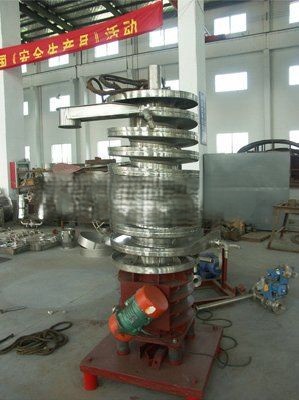
LZG Series Spiral Vibration Dryer
Product Overview The
wet material enters the spiral bed from the feeding port on the top, and under the action of the circumferential excitation force and gravity, the material jumps along the spiral bed from top to bottom to the bottom; at the same time, clean hot air enters from the bottom of the spiral bed, After sufficient heat and mass transfer with the material distributed on the bed, it is discharged from the top moisture outlet. So that the material achieves the purpose of drying.
Product application
This drying equipment is mainly suitable for drying traditional Chinese medicine pills; it is also suitable for drying granular, short strip and spherical materials in chemical industry, control, food, plastic, building materials, feed and other industries.
Main features
●The hot air passes through the material layer many times and flows in the reverse direction of the material, so that the heat exchange is sufficient and the thermal efficiency is high.
●Compact structure, small footprint.
●The residence time of materials in the bed can be adjusted, and the operation is convenient.
●When the material moves circularly along the spiral bed from bottom to top, it also jumps itself, which increases the contact between the material and the hot air and enhances the drying effect.
●Continuous feeding and discharging is suitable for assembly line operation, and it is easy to meet the "GMP" standard, which can replace the traditional box drying.
●There is basically no damage to the surface and shape of the material, which not only ensures the roundness of the pills, but also greatly reduces the breakage rate of the pills.