- Agriculture / Food
- Apparel / Textiles / Accessories
- Auto / Transportation
- Bags / Shoes / Accessories
- Electronics
- Electrical Equipment / Components / Telecoms
- Gifts / Sports / Toys
- Health / Beauty
- Home / Lights / Construction
- Machinery / Industrial Parts / Tools
- Metallurgy / Chemicals / Rubber / Plastics
- Packaging / Advertising / Office
ceramic equipment
-
Ceramic filter
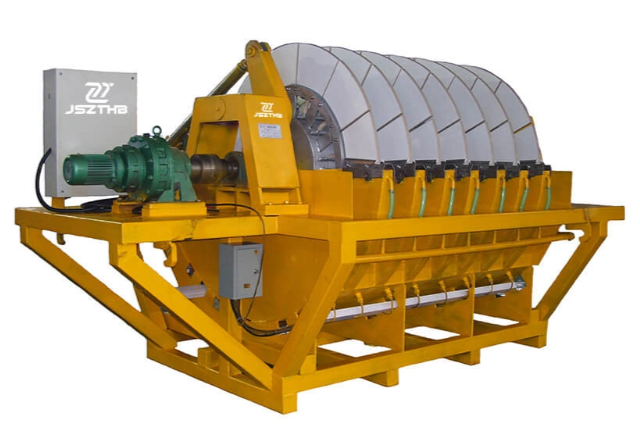
Ceramic Filter is the core equipment in the field of solid-liquid separation, with its core component being the Porous Ceramic Filter Plate, which achieves energy-saving dewatering through capillary effect and vacuum principle. The equipment mainly consists of Ceramic Filter plates, roller system, stirring system, ore feeding and discharging system, vacuum system, filtrate discharge system, scraping system, backwashing system, combined cleaning system, fully automatic control system, tank body, frame, and other components.
-
Double pressure ceramic concentrator
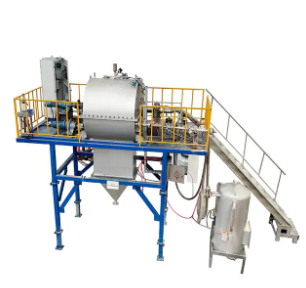
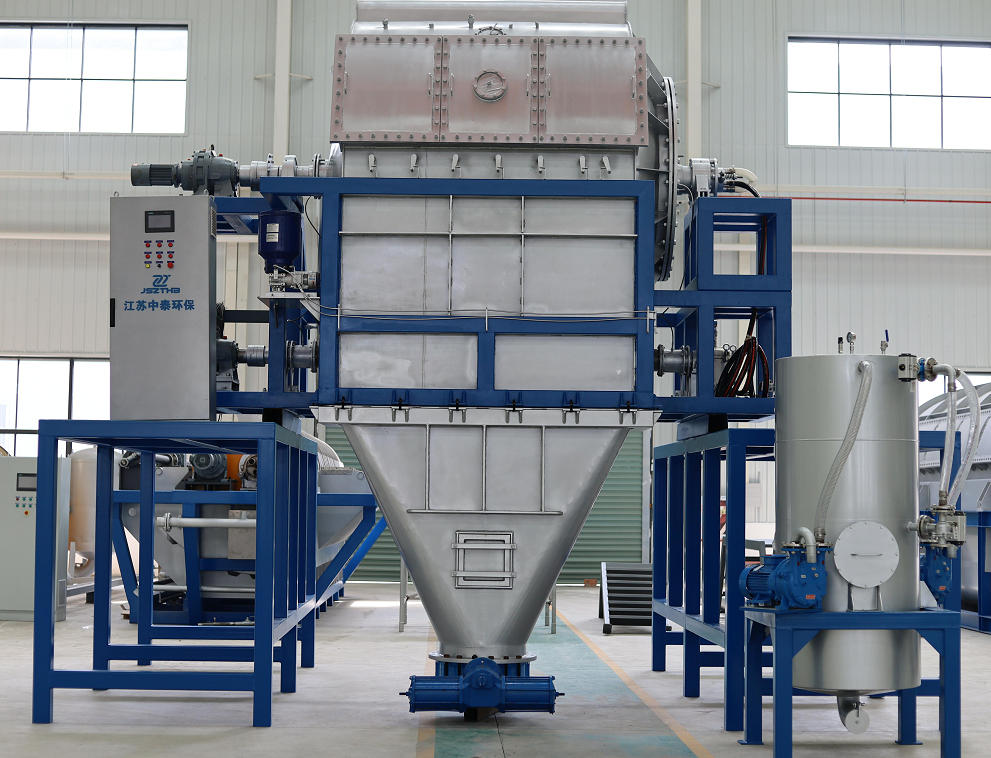
Double-pressure ceramic membrane concentrator: This type of machine is mainly suitable for concentrating slurry with a concentration of no more than 5%. It can further achieve solid-liquid separation and discharge clean water for recycling, increasing the concentration of the slurry, and is applicable for wastewater and circulating water treatment with lower concentrations, reducing water consumption in various process flows.
Working principle:
1. Firstly, the nano-scale ceramic membrane's capillary effect is utilized to extract clean water from the wastewater and retain the suspended solids in the wastewater.
2. Secondly, a vacuum system is used to reduce the pressure inside the ceramic membrane to increase the filtration pressure difference.
3. Thirdly, the external pressure of the ceramic membrane is increased to twice the atmospheric pressure, placing the ceramic membrane in a sealed chamber. The total filtration power is approximately three times higher than that of conventional filtration.
4. The bottom of the ceramic membrane concentrator is equipped with a sludge thickening device with an inclined tube, accelerating the sedimentation of suspended solids and solid particles in the wastewater, reducing the processing load of the ceramic membrane, and further increasing the clear water production capacity.
5. The concentrated slurry gathers at the cone-shaped hopper at the bottom of the concentrator. The hopper is equipped with concentration detection equipment. When the slurry concentration reaches the set value, the discharge valve is automatically opened to discharge the concentrated slurry to the next process for treatment.
6. When the filtration capacity of the ceramic membrane decreases, chemical cleaning combined with ultrasonic cleaning is used to restore the filtration performance of the ceramic membrane.
The entire machine integrates an advanced automated control system. The touch screen display can clearly reflect the working status of the equipment. The machine has an automatic diagnosis system that can predict the time when equipment failures will occur, allowing for timely equipment maintenance, thereby significantly improving the equipment utilization rate. The entire system can be integrated into the enterprise's production management system, assisting in the enterprise's automation management and safe production. -
Double-pressure ceramic dehydration machine
The dual-pressure nano-ceramic filter machine is a new type of environmentally friendly and energy-saving filtration and dehydration equipment developed based on the conventional filter machine.
1. It adopts nano-scale ceramic membrane surface ceramic filter plates, with smaller pores and more uniform distribution, which is less prone to clogging.
2. An external pressurization chamber is added, and the pressure inside the chamber can reach 1-2 bar. The filtration kinetic energy is twice that of the ordinary vacuum filter, and the pressure difference between the inside and outside of the filter plate is close to 3 bar, resulting in lower product moisture content and higher production capacity.
3. The "submarine" type discharge method is adopted, discharging through an intermediate transition material bin to ensure no pressure loss inside the bin.
The overall working principle is that the adsorption filter cake is formed under the action of the capillary effect of the nano-ceramic plate and the vacuum degree. Further moisture removal of the filter cake is carried out under the pressure inside the pressurized chamber. The discharge method of the filtrate is double-cylinder automatic liquid discharge.
This product is suitable for high-altitude areas and for fine sticky materials with high dehydration difficulty.
✅ Significant reduction in moisture content: Direct economic benefits are substantial
1. Reduced transportation costs: The moisture content of the filter cake is significantly decreased, resulting in a substantial reduction in the "unutilized water weight" for each ton of material during transportation, thereby directly saving logistics expenses.
2. Reduced drying energy consumption: If there is a subsequent drying process, it will significantly reduce the heat energy consumption required for drying, achieving energy conservation and cost reduction.
3. Enhanced product value: Lower moisture content means higher product grade and selling price (such as refined ore powder).
✅ Production capacity has significantly increased: A revolutionary breakthrough in production efficiency
1. Equal investment, higher returns: The processing capacity of each unit equipment has nearly doubled. Without increasing the number of equipment, the overall production capacity can be significantly enhanced to meet the expansion requirements.
2. Lower unit costs: Costs such as energy consumption, labor, and maintenance are shared by the higher output, resulting in a significant reduction in the cost per ton of ore processed.
3. Shortened investment payback period: The increase in returns brought about by efficiency improvement can recover the equipment investment cost more quickly.
✅ Technical Generation Gap Advantage
1. Dual-pressure system: Combines the advantages of pressure filtration and vacuum filtration, providing stronger filtration driving force and extremely high dehydration efficiency. This is the core technology for achieving low moisture content.
2. Nano-ceramic filter plates: The micropores are finer and more uniform, with good air permeability and water impermeability, and higher interception accuracy. It not only reduces moisture but also ensures clear filtrate and reduces metal loss. -
Dynamic cross-flow filtration system
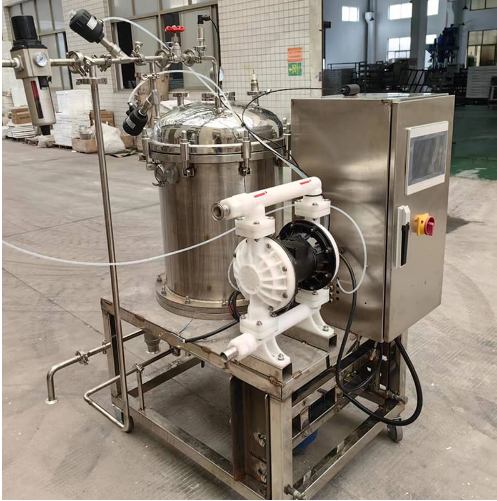
The dynamic cross-flow filtration system of the rotating tubular membrane is a membrane filtration system that realizes continuous operation by utilizing the membrane filtration technology of rotating tubular membranes. It uses rotating membrane tubes to achieve dynamic cross-flow, thereby avoiding the problems of membrane blockage and contamination that exist in traditional pressure difference-driven membrane filtration systems. This system is suitable for particle and liquid separation scenarios with high requirements for suspended solids, colloids, and macromolecules, such as in the fields of biotechnology, food and beverage, pharmaceuticals and chemical industries, as well as various industrial wastewater (acidic) treatment and coal chemical black water desolventization.
-
Crossflow tube concentration system
Product Description:
Market Background: The treatment of fine-grained solid-containing wastewater has always been a challenge in the environmental protection industry, especially for high-temperature solid-containing wastewater. The existing wastewater treatment systems mostly have undesirable aspects such as large, high equipment energy consumption, low treatment capacity, and high maintenance costs.
Working principle: By borrowing the advanced laminar flow filtration concept from abroad, we replace the multi-hole ceramic tube with a single-hole ceramic tube. This enables the "flow velocity within the tube" to be enhanced, significantly extending the service life of the ceramic tube. It integrates advanced concepts such as the rod-type ultrasonic cleaning system and polyurethane sealing system. Without increasing energy consumption or prolonging the maintenance period, the filtering performance of the ceramic can be fully utilized.
1. Each pipe section can accommodate 152 ceramic tubes, significantly increasing the effective filtration area compared to multi-hole pipes.
2. The system integrates advanced control concepts such as wastewater feed rate monitoring, water production rate monitoring, energy consumption monitoring, data statistics, and fault prediction system.
3. The incorporation of the rod-type ultrasonic cleaning system greatly enhances the production rate of the system, keeping the ceramic tubes in an efficient filtration state.
4. The variable cycle oscillating backwash system enables the restoration of ceramic tube filtration performance online without the need for shutdown.
5. The addition of the flow of the circulating pump and the feed pump can maximize the "in-flow velocity" indicator to the greatest extent.
6. Replacing the parallel pipes with series pipes can maximize the "in-flow velocity" without increasing energy consumption.